
Why Financial Education Matters More Than Ever in Today's Digital Economy
Learn how to manage debt, use online trading tools safely, and build a secure budget. Discover why digital financial literacy is essential today.
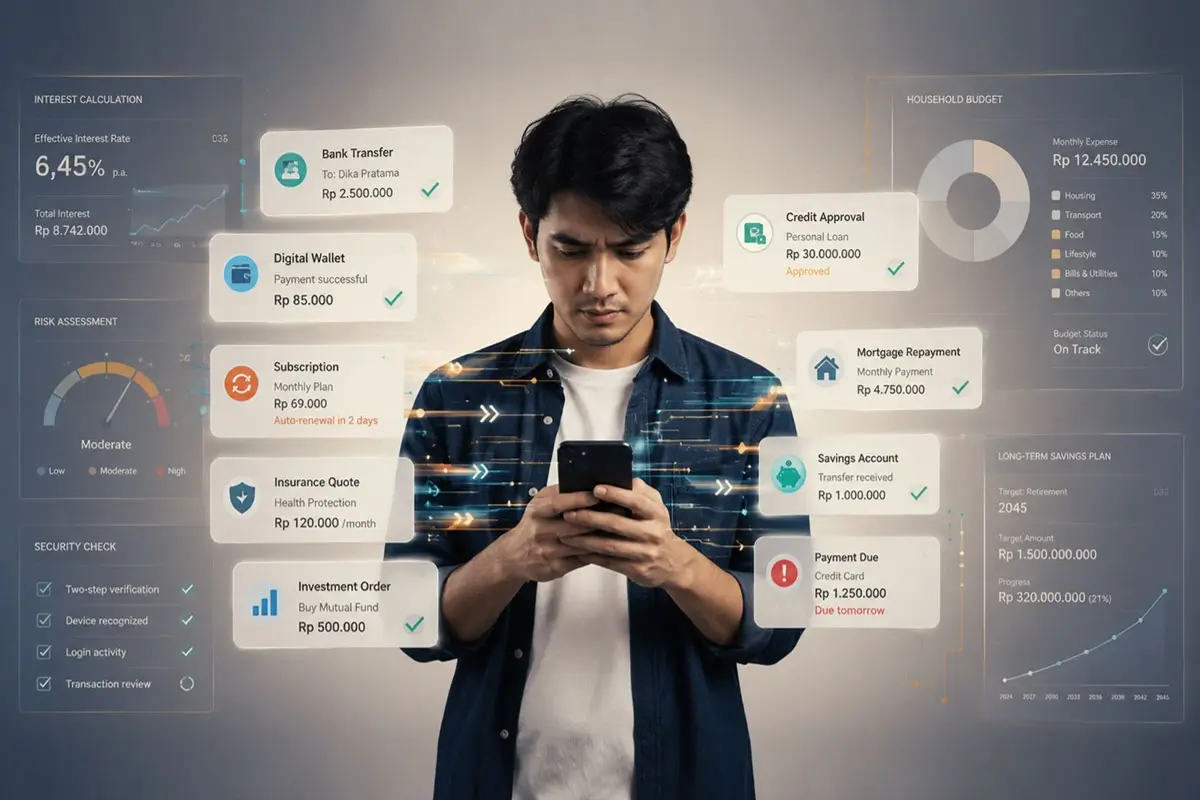
JAKARTA – Financial education is no longer just some dry academic subject. Today, literacy matters more than ever simply because almost every transaction we make happens on a mobile phone. While slick banking apps make spending money totally effortless, our brains have not caught up. We are still using ancient evolutionary hardware to evaluate modern risks. Relying purely on app convenience is a massive trap. When it comes to financial literacy, convenience is a terrible compass.
To navigate this landscape safely, modern consumers need specific financial literacy skills:
● Active verification: Check transaction fees manually rather than trusting default settings.
● Asset filtering: Learn to distinguish between speculative trends and products that match your financial goals and risk tolerance.
● Staying safe online: Spotting weird emails, recognizing modern digital scams, and keeping your passwords to yourself.
Years ago, managing your personal finance was actually a slow, manual chore. You couldn't just tap a screen; setting up a savings account, sorting out student loans, or even mapping out a pension for your retirement planning meant putting on shoes and walking into a real, physical bank. These events were rare, which naturally gave you time to think. Today, access to financial education has to change. Automated gateways and instant platforms have turned complex money management into a series of frictionless, subconscious clicks.
We need to learn about money for a different reason now. Forget memorizing textbook equations for a school curriculum test. Today, basic financial literacy is just survival. Without it, you are basically blind to sneaky fees and clueless when trying to compare complex financial products. But once you are financially literate, you finally connect the dots between mindless daily screen taps and your long-term stability.
Why does financial literacy matter more than ever in the digital economy?
Look at how banking has shifted. Physical branches are basically background noise now, while digital financial services run our entire lives. This total disappearance of friction is exactly why financial literacy matters more than ever in the digital economy. Modern finance lives on screens. You can send rent to another country, open a savings jar, or get an insurance quote in about three clicks.
This is incredibly convenient, but it also means we make massive financial decisions without thinking. There is no longer any buffer to stop you from acting on impulse.
Instead of one local bank, we are thrown into a wild financial landscape full of fintech apps, neon-colored digital wallets, and complex payment brokers. This massive expansion of digital services gives us access, but it also makes choices incredibly complicated.
What is digital financial literacy, and why is it important?
Digital financial literacy is simply where tech meets money. It is understanding interest rates while also knowing how to spot online scams, judge digital platforms, and figure out when to get professional financial advice. If you want to keep your hard-earned money financially secure, these skills have to become basic daily habits.
Frictionless design is engineered to speed up transactions. Automated identity checks and instant credit approvals encourage users to bypass the research phase entirely. However, convenience must not be confused with safety. A smooth app layout doesn't guarantee a safe product. It is incredibly easy to ignore the actual danger when a simple screen makes highly volatile assets look like a walk in the park. This is why sites like Investopedia keep telling users to look past those gamified dashboards that exist purely to hide brutal market risks.
What are the key differences between financial literacy and digital literacy?
Classic lessons teach you the math behind money in a vacuum, focusing on things like compound interest and yield formulas. Digital literacy is completely different; it is about actual internet hygiene, knowing how to use fintech apps, and keeping your personal data secure.
The real sweet spot is where they overlap. You can be a genius at calculating bond yields, but if you do not know how to spot a spoofed banking login page or how automated subscription cycles drain your card, your traditional knowledge cannot protect you.
What role does financial education play in the digital finance age?
The gap between technology and education is growing. According to the OECD/INFE International Survey of Adult Financial Literacy (2023), general levels of financial literacy remain dangerously low even in advanced economies. Access to technology is useless if people lack basic financial concepts. This is the core message of global movements like global money week: developing financial literacy is a critical survival tool, especially for students from disadvantaged groups.
Our lessons have to evolve. It is no longer about old paper ledgers but about understanding how digital screens manipulate our behavior, how algorithms target our wallets, and how to hold back when getting into debt is a one-click affair.
What are the risks and opportunities of digital financial products?
For freelancers and solo business owners, this digital shift is a lifesaver. You can bill clients, get paid internationally, and use advanced financial tools with almost zero hassle.
But that same convenience leaves you completely vulnerable to endless ads, game-like trading apps, and clever online scams. The simple truth is that technology evolves much faster than our actual psychology.
When moving serious money feels as casual as ordering food online, we completely stop checking the terms and conditions. That's where financial literacy helps us stop, take a breath, and look past the visual design of an app. We have to keep learning constantly instead of relying on outdated academic models.
What are the implications of digital risks and scams on financial well-being?
A single wrong click online can instantly drain years of hard work. Things like phishing links, leaked personal data, and dodgy investment scams don't just eat up your cash—they completely wreck your peace of mind.
Once your accounts are compromised, the stress bleeds into your everyday life, making it nearly impossible to focus on your job or your family. Recognising how these online traps work isn't just for tech-savvy people anymore; it is basic self-defence for your mental and financial health.
How can individuals improve their financial literacy skills?
You don't need a massive lifestyle overhaul to protect your financial goals. Just start with tiny, consistent moves:
● Audit your accounts: Cancel those forgotten free trials and subscriptions every few months.
● Check the real math: Look at the total interest cost of a loan, not just the low monthly payment they advertise.
● Prioritize liquidity: Many financial planners recommend keeping three to six months of living expenses saved up before taking additional financial risks.
● Watch the math grow: Understand how compound interest can work for you or against you.
● Watch your profile: Check your credit score once a year to keep your borrowing power intact.
How does financial literacy help in managing debt and investments in the digital economy?
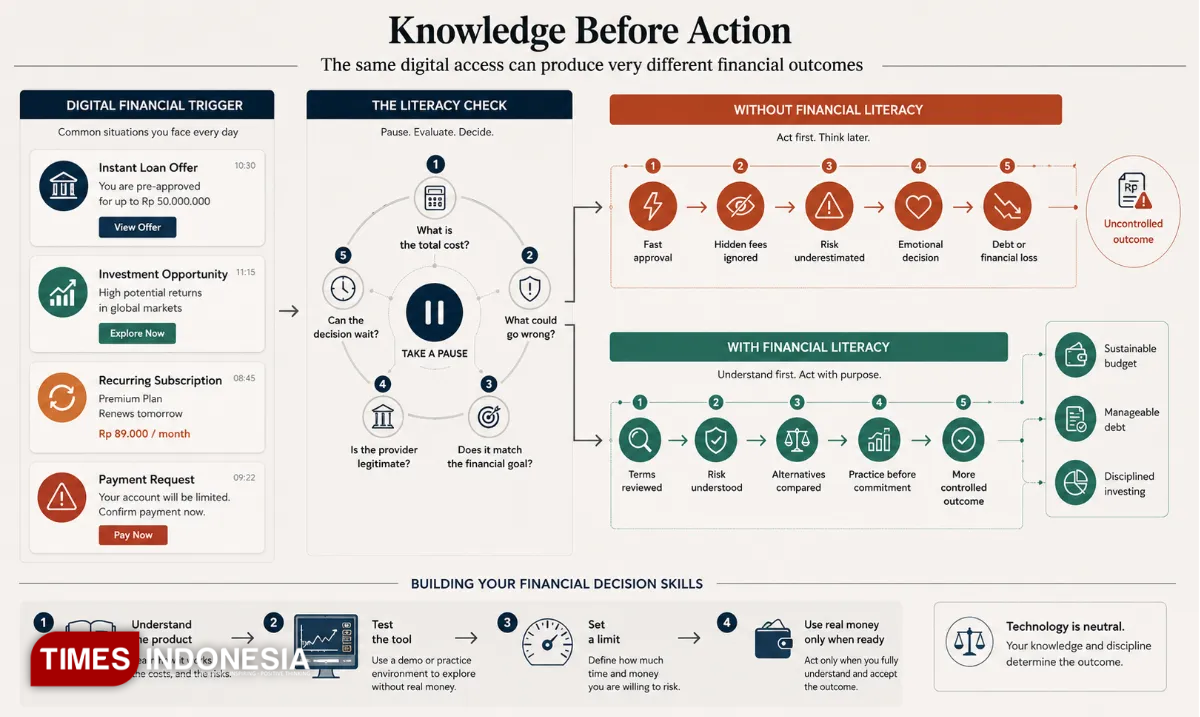
Managing Debt Smartly
Borrowing money isn't evil. Student loans or a mortgage can help you with buying a home or stepping up your career. The danger is signing a digital agreement without calculating what it actually costs over time.
Lenders love to scream about "low monthly payments" because they are easy to sell. But the real sting comes from long repayment terms, hidden fees, and compounding rates. Ignore those, and a small loan will quickly turn into unsustainable debt. Relying on minimum credit card payments just compounds your debt burden. It ruins your credit history, making it nearly impossible to apply for a mortgage with decent rates later. Managing debt takes an active payoff plan, not just automated minimum payments.
Using Professional Budget Analytics Tools
Trading takes real strategy, not just a fast internet connection. Tech can execute trades in milliseconds, but it won't do the thinking for you. Sure, anyone can open an account and speculate on global assets. But that accessibility has made a lot of people treat investing like a casino.
We see this play out perfectly on online trading platforms. These setups let you look at global assets and track wild financial markets from your living room. But the app is just an empty tool. Actually making money depends primarily on your financial knowledge and emotional discipline, not on how pretty the charts look.
Testing out systems like MetaTrader 5 WebTerminal is a great way to learn market structures, study price action, and see how orders actually execute. But you need to play around with these analytical tools before putting real cash on the line. Smart investors focus on keeping their money. They diversify, ignore the hype, and accept that risk is always part of the game.
Safe Practice Environments
You don't have to risk your savings while you learn. Using a demo trading account lets you get comfortable with market logic and risk management without losing a dime.
Pair this hands-on practice with solid, reliable guides, and you will quickly close that knowledge gap. Tech and platforms will always change, but a firm grip on basic financial concepts is your ultimate defence against market volatility, helping you stay secure while supporting broader global economic stability.
How does financial literacy impact the economy?
When citizens have a high level of financial understanding, it directly builds a much stronger shield for the nation's economic resilience. Truly financially literate people are far less likely to default on loans, trigger systemic debt crises, or become easy targets for predatory lending schemes.
On a larger scale, a financially educated population drives healthy market competition. When consumers actively compare interest rates and avoid bad financial products, banks and fintech companies are forced to offer better, fairer services.
How does financial literacy contribute to personal financial well-being?
Making good money doesn't mean you are safe. People who actively focus on developing financial literacy are much better at long-term planning, smart tax planning, wealth management, and setting up real emergency funds. These practical moves build lasting peace of mind.
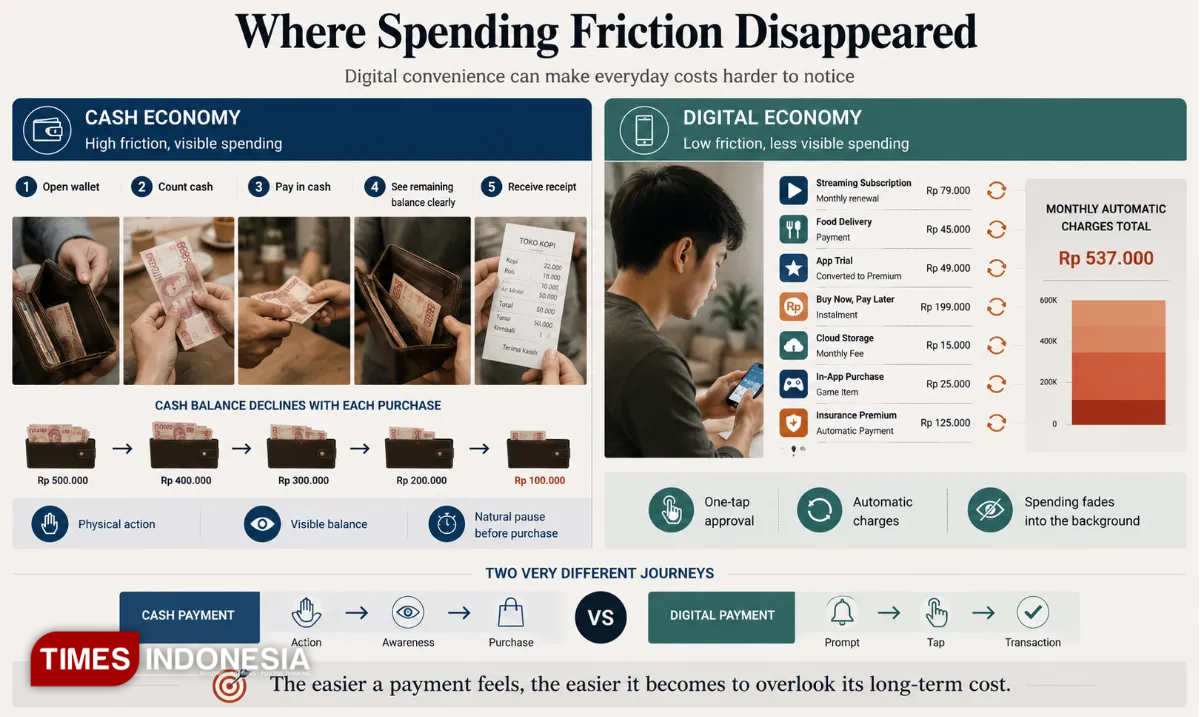
Your household budget isn't just rent and grocery bills anymore. It is constantly eaten away by silent micro-transactions: streaming services, app trials, and auto-renewing subscriptions you forgot you had. Because these funds leave your account automatically, it is incredibly easy to lose track of your actual net cash flow.
[Cash Economy: High Friction] → Physical cash is visually reduced.
[Digital Economy: Low Friction] → Automated card charges hide spending.
Making a budget that actually works today is about visibility. People have to actively hunt down those automated charges and check their accounts weekly before those tiny leaks drain their income.
Conclusion
How we spend and save has been completely transformed by our digital world. The ease of one-tap payments is great, but it demands total personal responsibility.
Educating yourself on these systems is the single best investment you can make today. It is all about building slow, deliberate habits so you can stop letting apps run your cash flow and start securing actual financial security. (*)
Simak breaking news dan berita pilihan TIMES Indonesia langsung dari WhatsApp-mu!
Klik 👉 Channel TIMES Indonesia
Pastikan WhatsApp kamu sudah terpasang.
